
A CLEARER PLACE TO START
Sensory Processing in Children: A Clear Guide for Parents
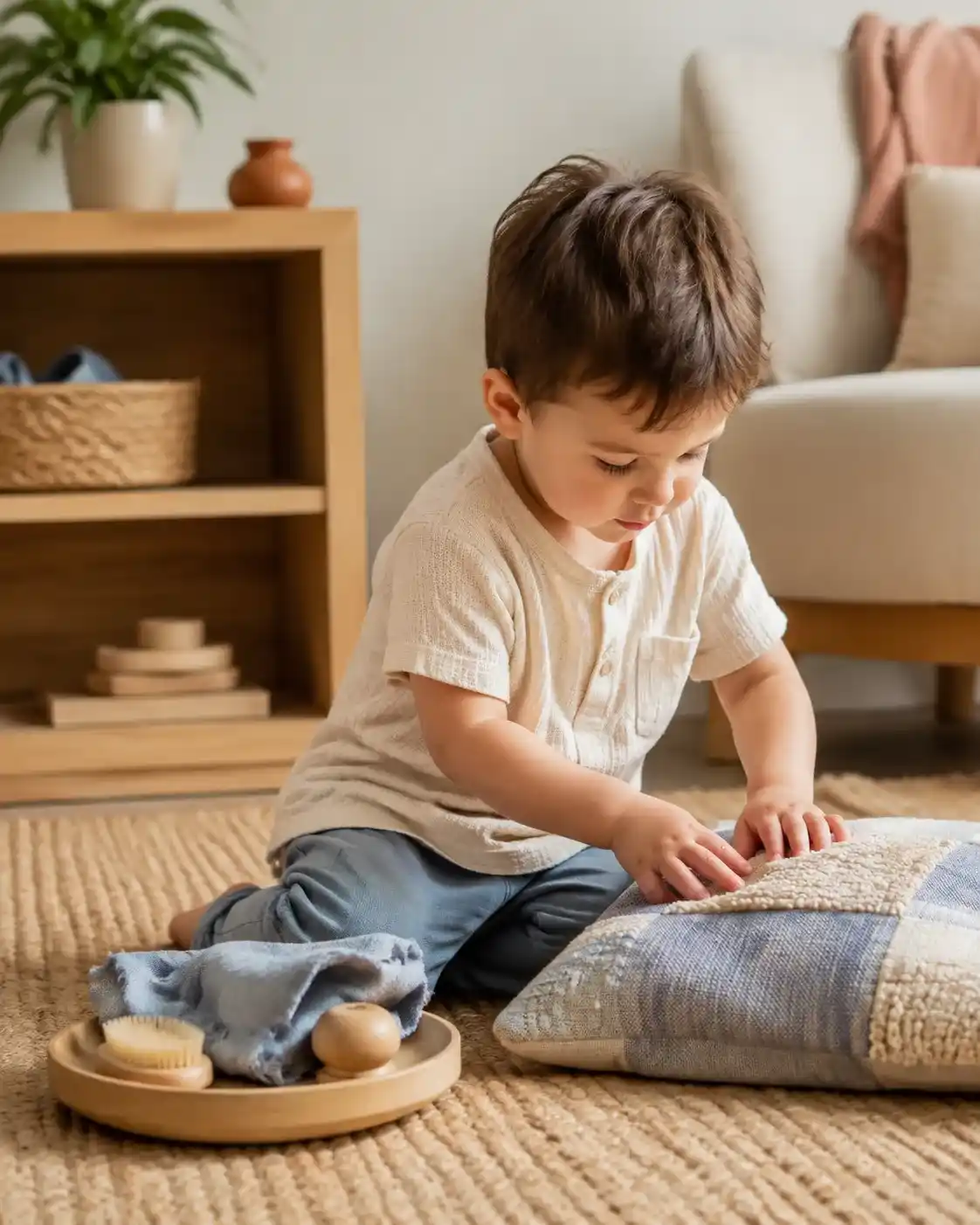
Sensory processing shapes how your child notices, organizes, and responds to everyday experiences—from getting dressed and eating to playing, learning, and winding down.
FROM INPUT TO RESPONSE
How sensory processing works in everyday life
Throughout the day, your child’s nervous system takes in information from their body and surroundings, organizes what feels important, and helps shape a response. This happens continuously—often without conscious effort.
01
Notice
The sensory system receives information from the environment and from inside the body—such as sound, touch, movement, body position, hunger, or temperature.
02
Organize
The nervous system sorts and combines this information, deciding what needs attention and what can remain in the background.
03
Respond
The brain and body use that organized information to support a response—such as moving, focusing, calming, communicating, or stepping away.
IN THE MOMENTS YOU ALREADY KNOW
Sensory processing is part of everyday life
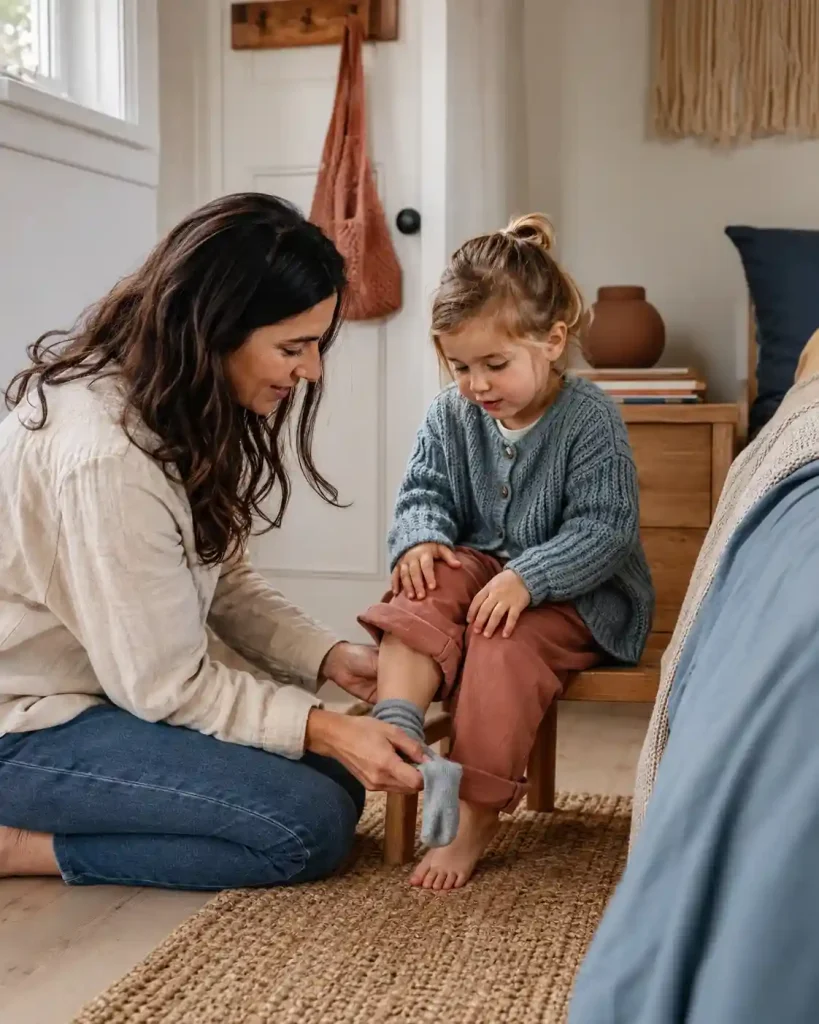
You may notice sensory processing during ordinary routines: getting dressed, washing hair, sitting at the table, entering a busy room, climbing at the playground, or settling for sleep. These moments can offer useful clues about what helps your child feel comfortable, engaged, and ready to participate.
A response that looks difficult from the outside may sometimes reflect how much sensory information a child is managing. Sensory needs can be one part of the picture—but they are not the only possible explanation for behavior.
MORE THAN THE FIVE SENSES
Eight sensory systems shape everyday experience
Along with sight, sound, smell, taste, and touch, the nervous system also receives information about movement, body position, and signals from inside the body. These systems work together rather than in isolation.
Visual
Helps the brain notice and interpret light, color, shapes, movement, and visual detail.
Auditory
Helps the brain detect and make sense of sounds, including volume, pitch, rhythm, and speech.
Tactile
Provides information through the skin about touch, pressure, texture, pain, and temperature.
Olfactory
Processes smells and connects them with recognition, memory, emotion, appetite, and safety.
Gustatory
Processes taste and works closely with smell, texture, temperature, and oral sensation during eating.
Vestibular
Provides information about movement, balance, speed, and the position of the head in relation to gravity.
Proprioception
Uses information from muscles and joints to support body awareness, force, posture, and coordinated movement.
Interoception
Notices internal body signals such as hunger, thirst, heartbeat, breathing, temperature, and the need for the bathroom.
DIFFERENT WAYS OF RESPONDING
Children can respond to sensory input in different ways
A child may actively seek certain sensations, avoid or react strongly to others, or notice some sensory information less readily. These responses can vary across sensory systems, situations, and even from one day to another.
Sensory seeking
A child may look for more frequent or intense sensory input—for example, moving constantly, jumping, crashing, touching objects, making sounds, or chewing.
Sensory sensitivity
A child may notice sensory input quickly or experience it intensely, leading them to cover their ears, avoid certain textures, resist movement, or leave busy spaces.
Noticing less
A child may need stronger or repeated sensory information before noticing it—for example, missing their name being called, seeming unaware of mess on their face, or using more force than expected.
These are patterns, not fixed labels. The same child may seek movement, avoid certain sounds, and notice internal body signals less readily—and their responses may change with fatigue, stress, illness, environment, or familiarity.
WHEN INPUT BECOMES TOO MUCH
Sensory overload can change how a child responds
Sensory overload can occur when the amount, intensity, or combination of sensory information exceeds what a child can comfortably manage in that moment. Their response may look like crying, escaping, covering their ears, becoming unusually still, shutting down, or losing access to familiar skills.
During overload, reducing sensory input, lowering language and demands, and offering a calm, safe space is usually more helpful than trying to teach, reason, or correct behavior in that moment.
Overload can build in layers
Sensory input builds
Noise, movement, touch, visual activity, internal signals, and demands may arrive together.
Capacity can narrow
Fatigue, hunger, stress, illness, transitions, or an unfamiliar environment may make input harder to manage.
A protective response appears
The child may escape, resist, cry, become still, or disconnect as their nervous system tries to reduce demands.
IMPORTANT CONTEXT FOR PARENTS
Sensory differences do not automatically mean a diagnosis
Every child has sensory preferences and occasional strong responses. Sensory differences may occur on their own or alongside autism, ADHD, developmental differences, anxiety, or other factors. A single behavior—or even several sensory patterns—cannot confirm a diagnosis.
Patterns can help you notice
- Which situations are consistently difficult or supportive
- How sensory responses affect comfort and participation
- What environmental changes may help your child
Patterns alone cannot determine
- Whether a child has autism, ADHD, or another diagnosis
- The single cause of a behavior or difficulty
- Which strategy or intervention will be appropriate
A qualified professional looks at the whole child—including development, health, communication, environment, daily participation, and patterns across time and settings—rather than relying on one checklist or behavior.
WHEN EXTRA SUPPORT MAY HELP
When to consider professional support
Consider speaking with your child’s pediatrician or an occupational therapist when sensory responses are frequent, intense, or making everyday activities harder for your child or family.
Signs that extra support may help
- Sensory responses regularly interfere with dressing, eating, sleep, play, or learning
- Your child frequently avoids activities or environments because they feel overwhelming
- Strong reactions are becoming more frequent, intense, or difficult to recover from
- Sensory needs are limiting your child’s participation or affecting family routines
Where to start
- Begin with your child’s pediatrician and share the patterns you have noticed
- Ask whether an evaluation by a pediatric occupational therapist may be helpful
- Bring examples from different routines, settings, and times of day
- Describe what helps your child feel safer, calmer, or more able to participate
Seeking support is not about placing a label on your child. It is about understanding their needs, reducing unnecessary stress, and finding practical ways to support participation in everyday life.
COMMON QUESTIONS, CLEAR ANSWERS
Frequently asked questions about sensory processing
These brief answers can help you make sense of common questions while keeping each child’s individual development, environment, and daily experience in view.
What is sensory processing?
Sensory processing is the way the nervous system notices, organizes, and responds to information from the body and the surrounding environment. It supports everyday activities such as dressing, eating, moving, playing, learning, and resting.
Do sensory differences always mean autism or ADHD?
No. Sensory differences can occur with or without a developmental diagnosis. They are common among autistic children and children with ADHD, but sensory patterns alone cannot determine whether a child has either condition.
Is sensory overload the same as a tantrum?
Not necessarily. Sensory overload happens when incoming input exceeds a child’s current capacity to process and respond. It may look like crying, escaping, freezing, shutting down, or intense movement. Behavior alone does not always reveal the cause, so context and patterns matter.
Can a child’s sensory responses change from day to day?
Yes. A child’s capacity can vary with sleep, hunger, illness, stress, transitions, the environment, and how much sensory input has already built up. A sound, texture, or routine that feels manageable one day may feel much harder on another.
How can I support sensory needs at home?
Start by observing patterns without judgment. Predictable routines, simpler language, advance notice of transitions, movement opportunities, quieter spaces, and meaningful choices may help. Support should be individualized because the same strategy will not work for every child or every moment.
When should I speak with a professional?
Consider speaking with your child’s pediatrician or a pediatric occupational therapist when sensory responses are frequent, intense, or regularly interfere with eating, sleep, dressing, learning, play, safety, or family routines.
A note on evidence and individual differences
Sensory processing is complex, and research continues to develop. This guide uses evidence-aware, developmentally informed language, but it cannot account for every child or replace individualized assessment. Recommendations should be considered in the context of your child’s health, development, environment, strengths, and daily needs.
Sources and further reading: American Academy of Pediatrics · American Occupational Therapy Association